Choosing the right brick colors for your house exterior can completely change the way your home looks. The right shade can make your house feel warm and welcoming, modern and sophisticated, or classic and timeless. The wrong combination, however, can make the roof, siding, trim, and brick look disconnected. Whether you’re building a new home, updating an existing brick exterior, or choosing siding colors to complement brick you already have, the secret is to look at the entire exterior as one coordinated color scheme. In this guide, you’ll learn how to choose the best brick colors for your house exterior, identify warm and cool undertones, match brick with roofing and trim, and narrow your choices before spending money on paint or renovation materials.
1. Start by Identifying Your Brick Color
Before choosing exterior paint colors, take a close look at the brick itself. Brick is rarely just one color. Even bricks that appear red, brown, gray, or white usually contain several subtle shades. These undertones can help you determine which exterior colors will work best. Red brick Red brick is a classic choice that can give a house a traditional, rustic, or welcoming appearance. Depending on the brick, it may contain orange, burgundy, brown, or muted pink undertones. Exterior colors that work well with red brick: • Warm white or creamy ivory • Charcoal gray or soft black • Sage green • Warm beige or taupe Deep navy blue Design tip: If your red brick has strong orange undertones, warm neutrals and muted greens can help create a balanced appearance. For a more dramatic look, consider charcoal trim with a warm white siding color. Brown brick Brown brick creates a grounded, natural appearance and works particularly well with traditional homes, craftsman houses, and rustic designs. Exterior colors that complement brown brick: • Creamy white • Greige • Olive green • Warm taupe Dark bronze or charcoal Avoid choosing a brown paint color simply because it matches the brick. A slightly lighter or darker shade, with a compatible undertone, often creates more visual depth. Gray brick Gray brick can look modern, understated, or traditional depending on its undertones. Some gray bricks lean blue, while others have warm beige or brown undertones. Exterior colors that work well with gray brick: • Crisp white • Soft black • Slate blue • Cool gray Muted sage green For blue-gray brick, consider cool whites and charcoal accents. If your brick is a warmer greige-gray, creamy whites and warm neutrals may produce a more harmonious result. White or painted brick White brick creates a bright, clean exterior and works with many architectural styles, from modern farmhouse to contemporary and traditional. Colors that complement white brick: • Black or charcoal • Natural wood tones • Soft gray • Navy blue • Sage green Warm beige The key is deciding whether you want a high-contrast exterior or a softer, more natural palette.
2. Choose a Brick Color Palette That Matches Your Home’s Style
The best brick color combination depends partly on your home’s architectural style. A palette that looks beautiful on a modern farmhouse may feel out of place on a traditional red-brick colonial. Here are six combinations to consider.
Combination 1: Red Brick, Warm White, and Black
Style: Classic, bold, and timeless. This combination balances the warmth of red brick with the brightness of white and the definition of black. Main material: Traditional red brick Siding or trim: Warm white Windows and accents: Matte black This is a strong choice for traditional homes, farmhouse exteriors, and houses with red brick foundations or lower-level brickwork. For a softer result, choose an off-white rather than a stark, blue-toned white.
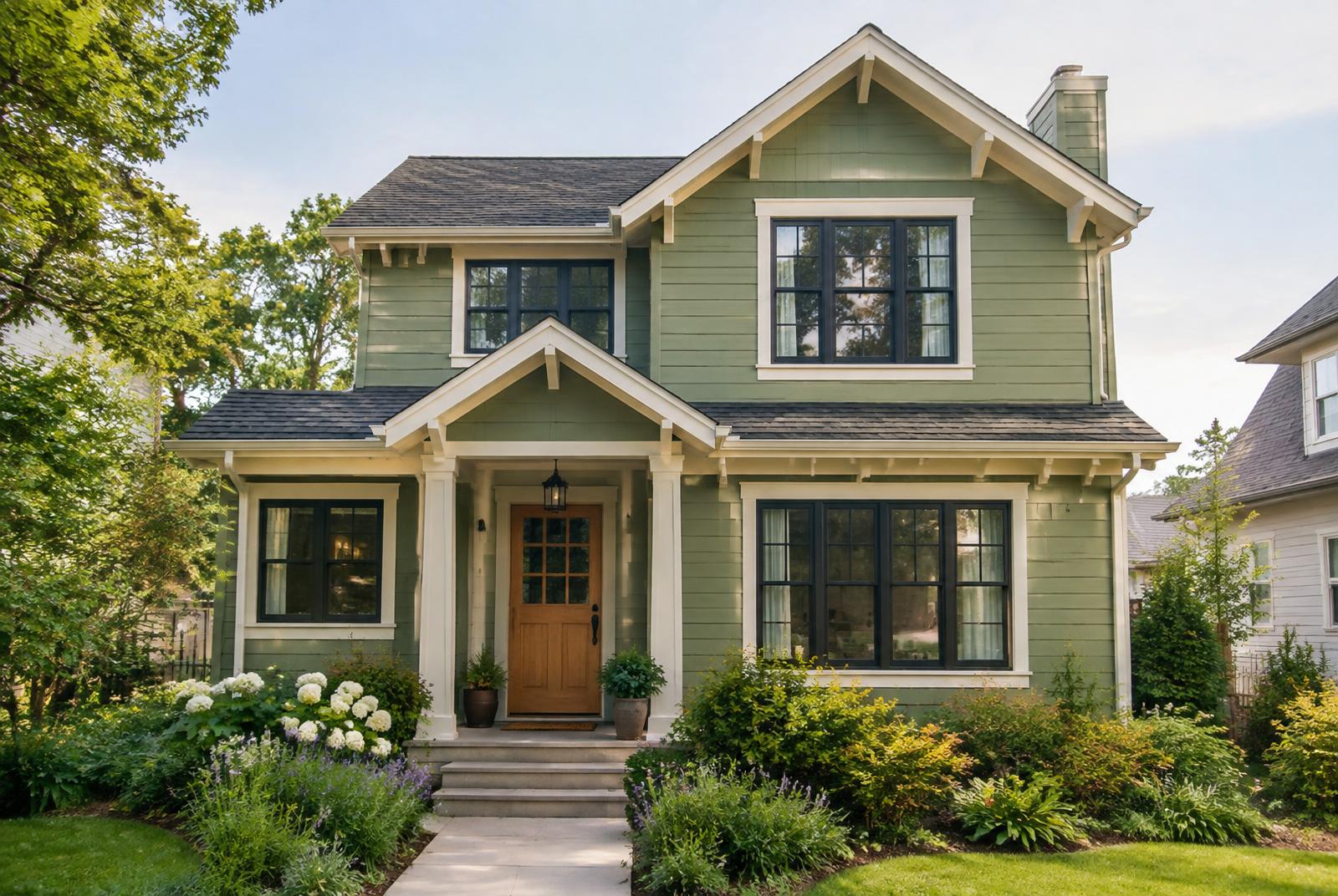
Combination 2: Brown Brick, Cream, and Sage Green
Style: Natural, relaxed, and welcoming. Brown brick pairs beautifully with earthy colors. Cream adds brightness, while sage green introduces a subtle natural accent. Main material: Brown or brown-red brick Siding and trim: Creamy white Shutters or front door: Muted sage green This palette works particularly well on craftsman homes, cottages, and properties surrounded by mature trees or landscaping. If your brick is very dark, use cream on larger surfaces to prevent the exterior from feeling too heavy.
Combination 3: Gray Brick, White, and Charcoal
Style: Modern, clean, and sophisticated. Gray brick can provide a neutral foundation for a crisp, contemporary color scheme. Main material: Medium or light gray brick Siding and trim: Clean white Windows and doors: Charcoal This combination is especially suitable for contemporary homes, modern farmhouses, and properties with simple architectural lines. If your gray brick has noticeable blue undertones, test your white paint carefully. Some whites can look unexpectedly yellow or creamy beside cooler gray surfaces.
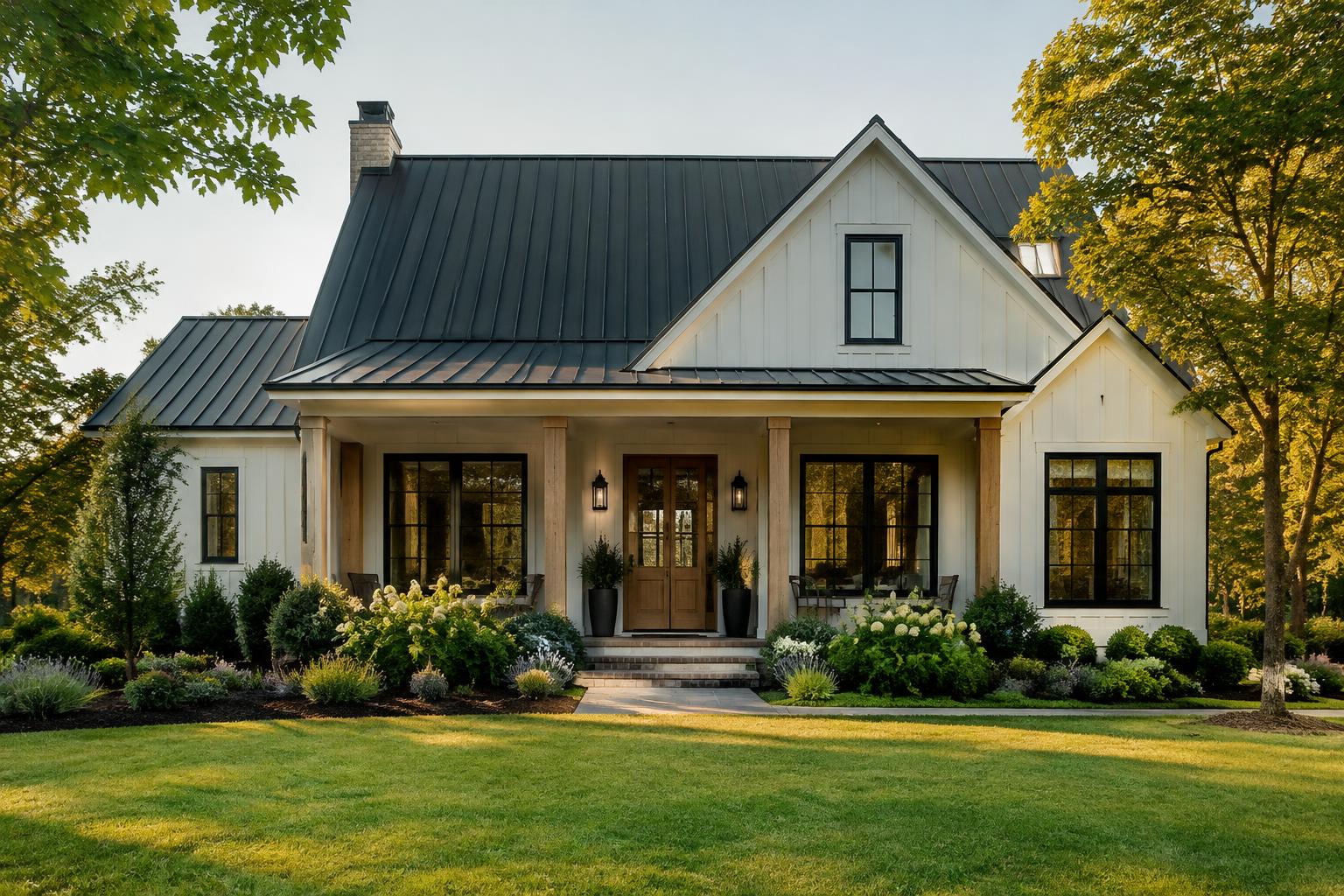
Combination 4: White Brick, Black, and Natural Wood
Style: Modern farmhouse, minimalist, and high contrast. White brick creates a bright backdrop, black adds definition, and natural wood introduces warmth. Main material: White or painted brick Windows and trim: Black Front door or porch accents: Natural oak or cedar tones This palette works particularly well when the home has black-framed windows, a simple roofline, or a prominent front entrance. If the exterior already contains plenty of black, use wood accents sparingly to avoid making the palette feel busy.
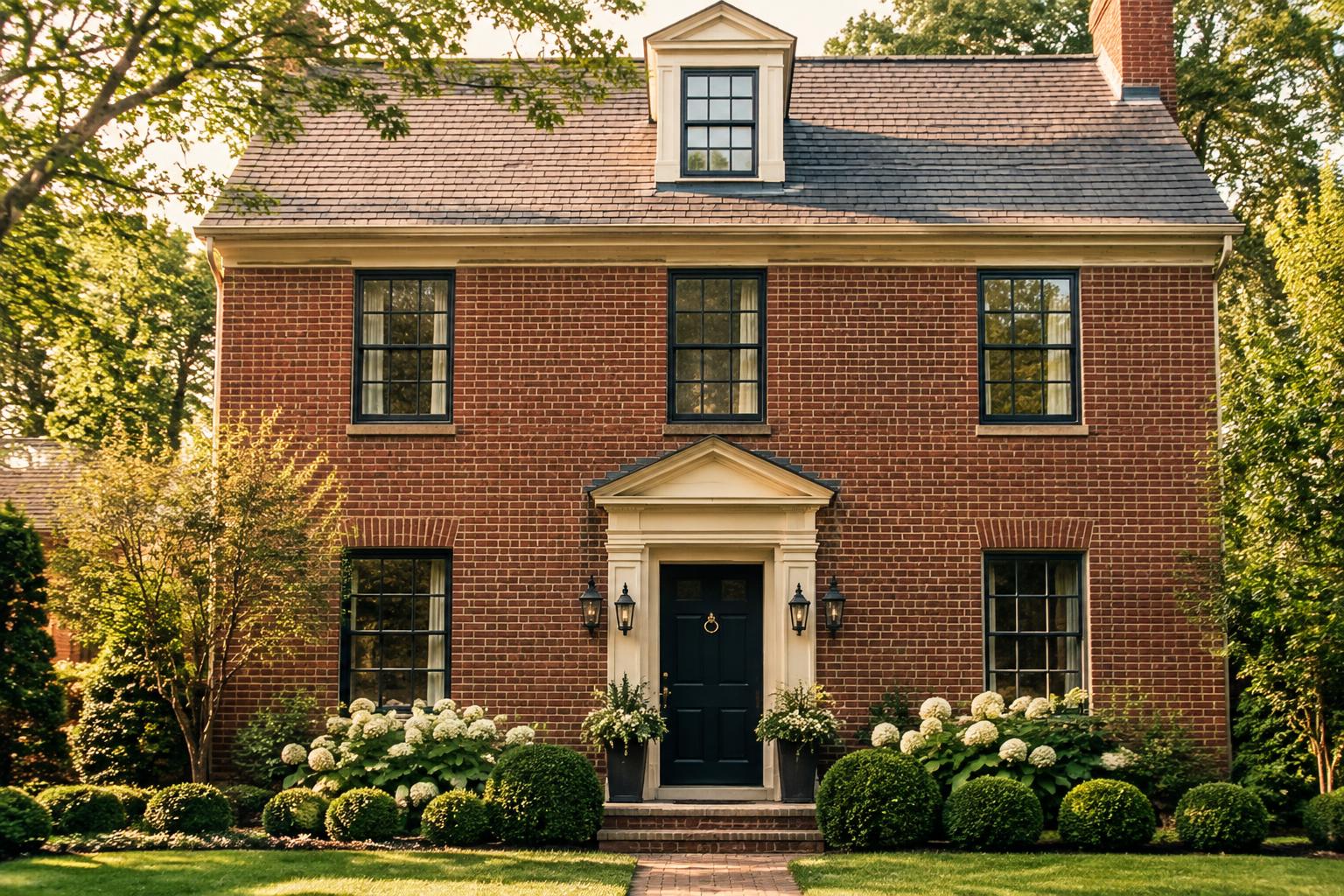
Combination 5: Red Brick, Navy Blue, and Soft White
Style: Traditional, refined, and distinctive. Navy blue offers a classic alternative to black. It creates contrast against red brick without making the exterior feel as stark. Main material: Red brick Trim: Soft white Front door or shutters: Deep navy blue This combination suits colonial-style houses, traditional family homes, and properties with symmetrical windows or decorative shutters. Choose a navy with enough depth to remain rich outdoors, and make sure the white trim complements the brick’s undertones.
Combination 6: Beige Brick, Greige, and Dark Bronze
Style: Warm, understated, and elegant. Beige brick can sometimes look flat when paired with similar beige paint. Adding variation in tone and a darker accent creates more dimension. Main material: Beige or light tan brick Siding: Warm greige Windows, gutters, or doors: Dark bronze or charcoal This is a good option for transitional homes, suburban houses, and exteriors that need a coordinated but understated appearance. The trick is to select a greige that is noticeably different from the brick without clashing with its undertones.
3. Match Your Brick Color to Your Roof
Your roof is one of the largest fixed color elements on your home. Even if you’re not planning to replace it, its color should influence your exterior palette. A brick color combination that looks attractive on a paint chart may look very different beside a dark brown, red, or blue-gray roof. These are starting points rather than strict rules. The exact undertones of your roof and brick matter just as much as their general colors. A useful rule: If your roof has a warm undertone, begin by testing warm exterior neutrals. If your roof has a cool undertone, start with cooler or balanced neutrals. You can still mix warm and cool colors successfully, but it helps to have one dominant undertone tying the palette together.
4. Decide Whether You Want a Warm or Cool Exterior
One of the easiest ways to narrow your choices is to decide whether you prefer a warm, cool, or balanced exterior. Warm brick color schemes Warm palettes often include terracotta, reddish brown, tan, cream, beige, and warm wood. They can make a home feel inviting and natural, particularly when the surrounding landscape includes trees, stone paths, or warm-toned paving. Choose this direction if you like: • Traditional and rustic homes • Earthy, natural materials • Creamy whites and warm neutrals • Wood doors and bronze hardware Cool brick color schemes Cool palettes often feature gray, blue-gray, slate, charcoal, and crisp white. They tend to create a more contemporary and structured appearance. Choose this direction if you like: • Modern and minimalist architecture • Black-framed windows • Cool gray or slate roofs • High-contrast exterior details Balanced or neutral brick color schemes Neutral palettes combine shades such as greige, soft white, muted gray, and taupe. They are useful if your brick contains both warm and cool tones or if you want flexibility when selecting doors, shutters, and landscaping. When you’re uncertain, a balanced neutral palette is often a good place to begin — but test it beside the actual brick before making a decision.
5. How to Choose Exterior Paint Colors for a Brick House
If your brick is staying as it is, you don’t necessarily need to paint or replace it to transform the exterior. Changing the surrounding siding, trim, shutters, or front door may be enough. Start with the fixed materials, then choose paint colors that complement them. For brick houses with siding If your house combines brick with horizontal siding, board-and-batten siding, or another cladding material, decide which material should dominate visually. For example, red brick paired with warm white siding creates a classic, balanced appearance. Gray brick with charcoal details and light siding feels more contemporary. Avoid choosing a siding color that is almost identical to the brick but slightly mismatched. A deliberate contrast or a clearly coordinated tone usually looks more intentional. For brick houses with white trim White trim can brighten brick and emphasize architectural details. The important decision is whether the trim should be crisp white or warm white. Red and orange brick: Often works well with warm white. Brown and tan brick: Try ivory or creamy white. Gray brick: Test both crisp and neutral white. White brick: Consider black, charcoal, or a contrasting neutral for definition. These are useful starting points, not fixed formulas. Natural light and the specific brick color can change how the trim appears. For brick houses with black windows Black windows create a strong architectural outline. They tend to work well with white, red, brown, and gray brick, provided the rest of the exterior feels balanced. If the brick is very dark, consider lighter trim or siding to create separation. If the brick is light, black windows can become a striking focal point. You don’t have to make every other exterior feature black. Repeating black in a front door, lighting fixtures, or limited trim details is often enough.
6. Choose Brick Colors That Complement Your Landscaping
Your exterior doesn’t stop at the walls. Trees, grass, garden beds, walkways, and fences all influence how the house looks. A brick color that appears balanced on its own might feel too orange beside a cool gray driveway or too dark against dense green landscaping. Consider these relationships: Homes surrounded by greenery: Sage, cream, warm gray, and earthy brick colors can blend naturally with the surroundings. Homes with stone walkways: Look for shared undertones between the stone, brick, and exterior trim. Homes with little landscaping: A warm front door or carefully chosen accent color can add visual interest. Homes with mature trees: Lighter siding or trim may help the house stand out against darker surroundings. You don’t need to match your house to every outdoor element. Instead, look for a few colors that repeat naturally across the property.
7. Test Brick Color Combinations Before Making a Final Decision
This is one of the most important steps in the entire process. Brick is a textured, varied material, so a digital color palette can only show part of the picture. Paint colors also change in appearance depending on sunlight, shade, surrounding materials, and the direction your house faces. Before committing to a color scheme, use the following process. Step 1: Photograph your house Take a clear photo of the front of your home in natural daylight. Include the roof, brick, windows, siding, and front door. Avoid heavy filters, unusual lighting, or strong color adjustments that might distort the existing materials. Step 2: Identify the colors that cannot easily change Write down the colors of your roof, brick, stonework, windows, and any other permanent exterior features. These are your starting points. Step 3: Select three possible color directions Instead of testing dozens of random colors, create three distinct palettes. For example: Classic: Red brick, warm white trim, black accents. Natural: Brown brick, creamy siding, sage green details. Modern: Gray brick, crisp white siding, charcoal accents. Comparing three clear directions makes it easier to recognize which style suits your home. Step 4: Preview the colors on your own house Use an exterior paint visualizer or photo-editing tool that lets you upload your house photo and experiment with different paint colors. Try changing one element at a time, such as the siding, trim, shutters, or front door. If you’re keeping the brick unpainted, leave it unchanged in the preview so you can judge how the surrounding colors work with it. Step 5: Test physical paint samples Once you have a favorite palette, test paint samples on suitable exterior sample boards or in accordance with the paint manufacturer’s instructions. Observe them in direct sunlight, shade, and at different times of day. Digital previews are useful for comparing ideas, but physical samples help you make a more reliable final decision.
8. Common Mistakes to Avoid When Choosing Brick Colors
Even attractive individual colors can create an unbalanced exterior when combined incorrectly. Watch out for these common mistakes. Choosing paint without considering the brick’s undertones A white paint may look beautiful on its own but appear too yellow or too blue beside your brick. Always compare colors side by side. Ignoring the roof color The roof is a major part of the exterior. A palette that clashes with the roof may never look quite right, even if the siding and trim are attractive. Using too many competing colors Brick already contains natural color variation. Adding several unrelated siding, trim, shutter, and door colors can make the exterior look cluttered. Start with a main material, one primary supporting color, and one or two accents. Choosing colors from online images alone Online inspiration photos are useful for discovering combinations, but the images may have different lighting, filters, or materials from your home. Use them to find a direction rather than as exact paint-matching references. Forgetting about the front door The front door can become a focal point without requiring a complete exterior makeover. Navy, black, muted green, and natural wood tones are worth considering depending on the brick and overall palette. Making a decision from a tiny paint chip Small paint chips can make colors appear different from how they look across a large exterior wall. Use larger samples and view them outdoors before committing.
9. Frequently Asked Questions About Brick Colors for House Exteriors
What is the best brick color for a house exterior? There is no single best brick color for every home. Red, brown, gray, white, and beige brick can all look attractive when coordinated with the roof, trim, siding, and architectural style. The best choice is one that complements your home’s permanent materials and the appearance you want to create. What exterior paint color looks best with red brick? Warm white, cream, charcoal, sage green, and navy blue are all worth testing with red brick. The best choice depends on whether your brick leans orange, brown, burgundy, or pink. Warm white and muted green are useful starting points if you want a softer, welcoming appearance. What colors go with brown brick? Cream, warm white, greige, olive green, taupe, and charcoal can complement brown brick. Look for colors that share or balance the brick’s undertones. If your brick is very dark, lighter siding or trim can create a more balanced exterior. Can you combine different brick colors on one house? Yes. Different brick colors can work together when they share compatible undertones or serve a clear architectural purpose. For example, a darker brick on the lower portion of a house may contrast with lighter brick above. However, using several unrelated brick colors can make the exterior look busy. If you’re combining materials, limit the palette and consider how the colors transition between sections. Should exterior trim be lighter or darker than brick? Either can work. Light trim can brighten the exterior and emphasize architectural details, while dark trim creates definition and contrast. For a traditional red-brick house, warm white trim is a classic option. For a modern house with light gray or white brick, charcoal or black trim may create a stronger contemporary look. How can I see which brick colors will look best on my house? Start by photographing your house and identifying the existing brick, roof, and other fixed materials. Then create a few coordinated color palettes and preview the siding, trim, shutters, and door on your own photo. A photo-based exterior visualizer can help you compare different options before buying paint or materials. Always confirm your preferred colors with real samples before making a final decision.
Final Thoughts
Choosing the right brick colors for your house exterior becomes much easier when you work with the materials you already have rather than selecting colors individually. Start with your brick’s undertones, consider the roof and other permanent features, and decide whether you prefer a warm, cool, or neutral look. Then narrow your options to a few coordinated palettes and test them on your actual house. Most importantly, don’t rely on inspiration photos alone. A color combination that looks beautiful on someone else’s home may look completely different on yours. Your next step: Take a photo of your house, identify the colors you cannot change, and compare three exterior palettes that complement those materials. Seeing the colors together on your own home is one of the most practical ways to move from inspiration to a confident decision.
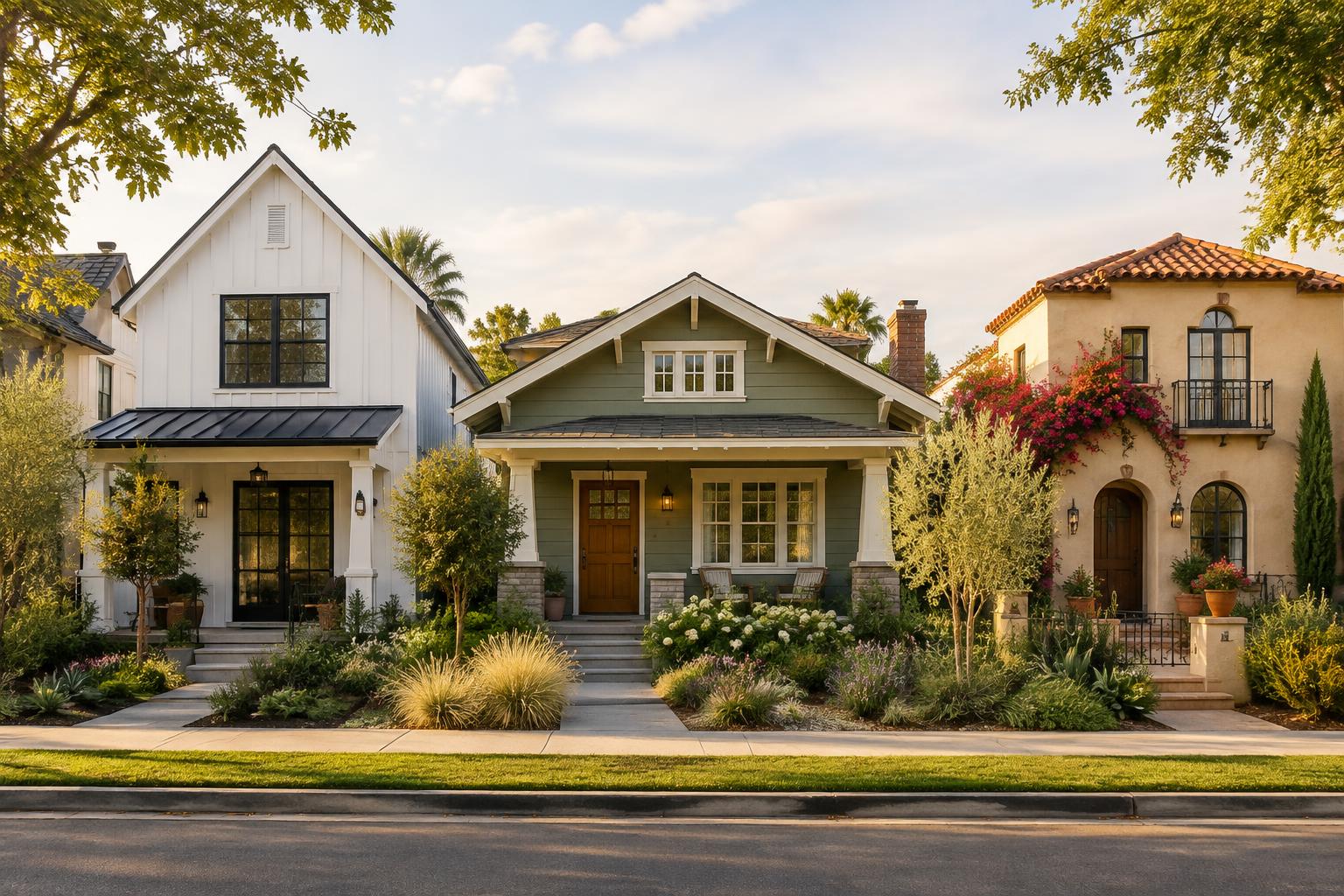
The cover image is AI-generated. The supplied PDF describes its six combinations in words without paint codes, so each house color example uses approximate colors. Always test physical samples beside your actual brick.