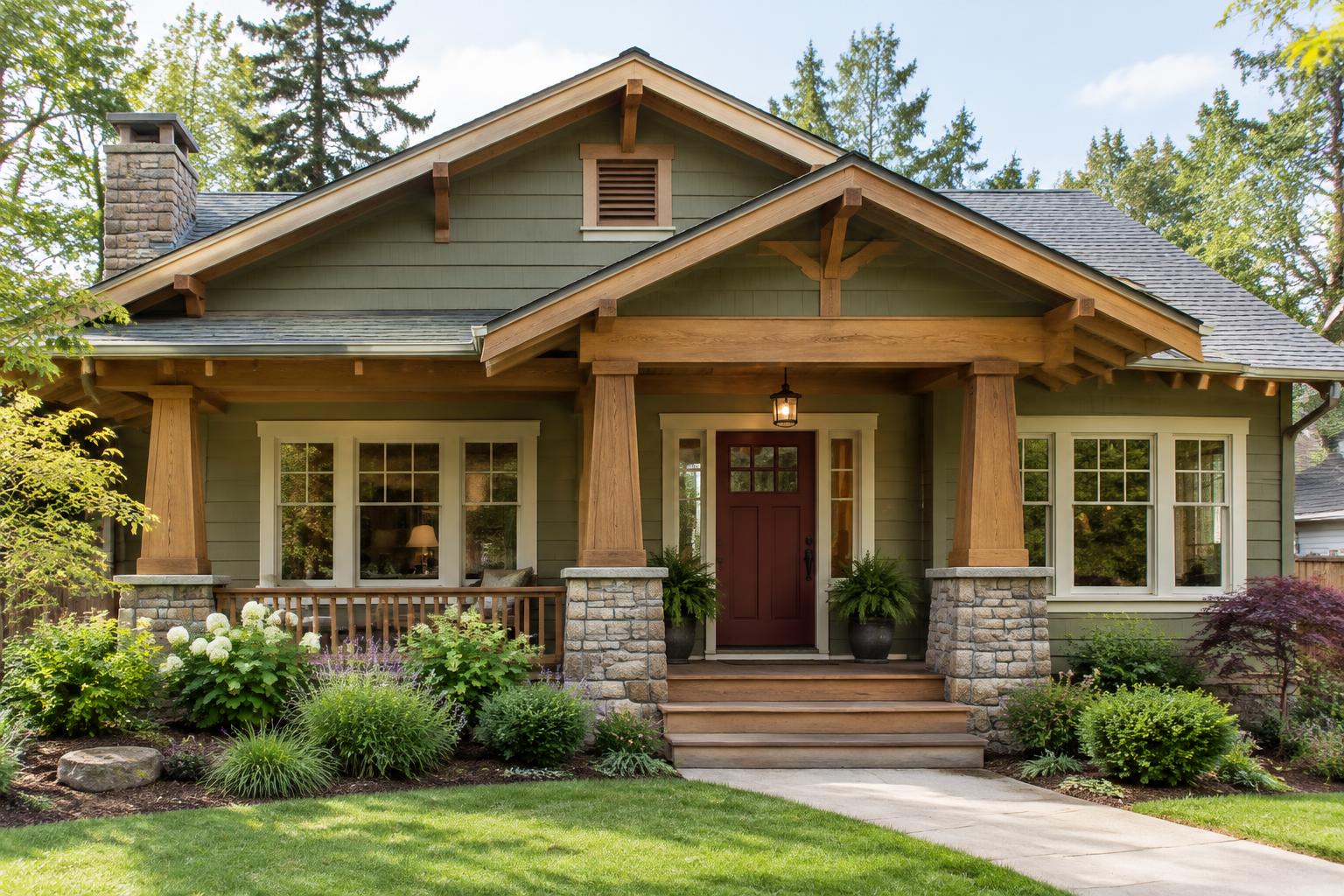
Craftsman homes are loved for their honest craftsmanship. Exposed rafter tails, chunky brackets, tapered porch columns, built-in details and richly stained wood all say that real hands made this house. When your Craftsman has natural wood trim, the paint color on the rest of the house has an important job: it should make the wood look even better. The right body color can bring out the warmth of oak, cedar or walnut, while the wrong one can make wood look dull, orange or muddy. This guide explains how to choose exterior colors that flatter natural wood trim, then shares ten palettes with body, wood stain, accent and door colors laid out for you, with hex codes so you can picture the finished look.
What Makes Natural Wood Trim Special
Natural or stained wood trim adds warmth, texture and character that paint cannot copy. On a Craftsman, it often appears on: • Porch beams, posts and brackets • Exposed rafter tails and eave details • Window and door casings • Front doors and sidelights • Garage doors and pergolas • Railings and ceilings on the porch Because wood is a fixed element, the best approach is to choose body and accent colors that complement its undertone, instead of fighting it.
Start by Looking at Your Wood
Not all wood is the same, so take a close look at yours before choosing paint. • Light oak or honey tones: Warm, golden and cheerful. They look beautiful with soft greens, creams and blue-grays. • Medium cedar or reddish tones: Rich and earthy. They pair well with sage, cream, deep green and slate blue. • Dark walnut or mahogany: Deep and dramatic. They look striking with cream, soft gray-green and warm taupe. • Weathered or gray wood: Soft and subtle. They suit muted greens, greiges and blue-grays. Hold a piece of the wood or a chip that matches it next to your paint chips outdoors, since daylight changes how both colors look.
10 Craftsman Palettes for Natural Wood Trim
The swatches and hex codes below are close on-screen approximations. Always bring them to your paint store for matching and test real samples next to your wood before you buy.
1. Sage Green with Natural Oak
Sage green and oak are a classic Craftsman pairing. Cream window sashes brighten the facade, and a burgundy door adds richness. Best for: Bungalows and homes surrounded by trees and gardens.
2. Warm Greige with Honey Oak
A soft greige lets golden wood take center stage. Deep green sashes add contrast, and a rust door ties into the wood tones. Best for: Craftsman homes with brown or gray roofs and stone porch bases.
3. Deep Forest with Walnut
A rich green body with dark walnut trim feels woodsy and traditional. Cream sashes lighten it up, and a mustard door glows against the dark colors. Best for: Craftsman homes in wooded or hillside settings.
4. Soft Cream with Cedar
A warm cream body feels sunny and welcoming. Cedar trim stands out beautifully, and green and red accents give it a classic look. Best for: Sunny lots and cozy bungalows.
5. Slate Blue with Mahogany
Cool slate blue and warm mahogany create a beautiful contrast. Cream sashes keep it crisp, and a golden door adds sparkle. Best for: Craftsman homes with gray roofs and reddish wood.
6. Warm Taupe with Walnut
Taupe is a calm, earthy neutral that lets dark wood stand out. Olive sashes and an oxblood door feel rich and historic. Best for: Traditional Craftsman homes with stone or brick piers.
7. Gray-Green with Oak
A gray-green body feels soft and natural, and oak trim looks warm against it. A terracotta door adds a friendly pop. Best for: Homes with lots of landscaping and shade.
8. Mustard Gold with Espresso
A golden body with dark espresso trim is a bold, authentic Craftsman combination. Cream sashes and a green door balance it beautifully. Best for: Craftsman homes that want a warm, vintage look.
9. Charcoal Brown with Cedar
A deep, earthy body makes cedar glow like firelight. Cream sashes lighten the look, and a rust door keeps it warm. Best for: Modern Craftsman homes and wooded lots.
10. Soft Blue-Gray with Honey Oak
A cool blue-gray feels fresh and airy, and honey oak adds warmth. White sashes and a navy door make it feel polished. Best for: Coastal Craftsman homes and cottages.
How to Handle Natural Wood Trim
A few simple habits keep wood looking its best next to paint. • Match the undertone, not the exact color. Choose body colors with warm or cool undertones that flatter your wood, rather than trying to match it. • Keep wood consistent. Use the same stain on beams, brackets, columns and doors so the wood reads as one design feature. • Paint window sashes and some trim. Many Craftsmans use painted sashes and window frames with stained wood details, which creates contrast. • Use a protective finish. Exterior wood needs a quality stain or sealer with UV protection, and it should be refreshed on schedule. • Check the wood before painting. Sand, clean and repair rough spots, and choose a finish that suits the type of wood.
Choosing the Right Finish
The sheen of your paint and the type of wood finish affect both appearance and durability. • Body siding: flat or low-sheen finishes look soft and natural. • Painted trim and sashes: satin or semi-gloss helps the details stand out and wipes clean easily. • Natural wood trim: use a semi-transparent stain or a clear exterior finish with UV protection. • Doors: semi-gloss or gloss gives a polished, durable finish, or use a stain and clear topcoat if you want the grain to show. • Porch floors: use a floor-rated enamel in satin. Always follow the product label for temperature range, primer needs and drying times, and ask your paint store about the best system for your wood and climate.
How to Test Your Colors
Wood and paint influence each other, so test them side by side. 1. Paint large samples, at least two feet square, on primed boards. 2. Hold samples right next to your wood trim and door. 3. Move them around the house. Sunny and shaded sides can look very different. 4. Check them at different times of day, including morning, midday and evening. 5. Step back to the street and see how the palette reads from a distance.
Common Mistakes to Avoid
• Painting over beautiful wood details. Natural trim is a signature Craftsman feature, so think carefully before covering it. • Choosing a color that clashes with the wood undertone. Compare chips against real wood in daylight. • Using too many colors. Three or four colors plus the natural wood are plenty. • Ignoring wood maintenance. Stained wood needs regular care to keep its color and protect it from sun and rain. • Skipping the test. A color that looks perfect on a chip can look very different next to real wood.
Final Thoughts
Natural wood trim gives a Craftsman home warmth and personality that paint cannot match. Start by studying your wood, choose a body color that complements its undertone, add sashes and a door that bring in contrast and let the craftsmanship shine. Test your samples next to the real wood, take your time and trust your eye. With a thoughtful palette, your Craftsman will look warm, authentic and beautifully timeless for generations to come.
The cover image is AI-generated. House color examples use the hex codes supplied in the PDF. The swatches and hex codes are close on-screen approximations, not exact paint or stain matches. Always test real samples next to your natural wood trim before buying.