There is a reason colonial homes have charmed people for centuries. The balanced windows, the centered front door and the clean rooflines give the house a calm, confident look that works in almost any setting. But that classic architecture also means color matters a great deal. Because the shape of a colonial is so orderly, your paint choices do the talking. The good news is that colonials are very forgiving. They look wonderful in soft neutrals, stately darks and cheerful heritage colors alike. Below are twelve exterior color schemes that have stood the test of time, each with a body color, trim color, shutter color and front door color to help you picture the finished home. Use them as a starting point, then test real samples on your own house before you commit. Each scheme includes a color palette with approximate hex codes so you can preview the look. Use them as a guide for matching at a paint store, and always test real paint samples on your house.
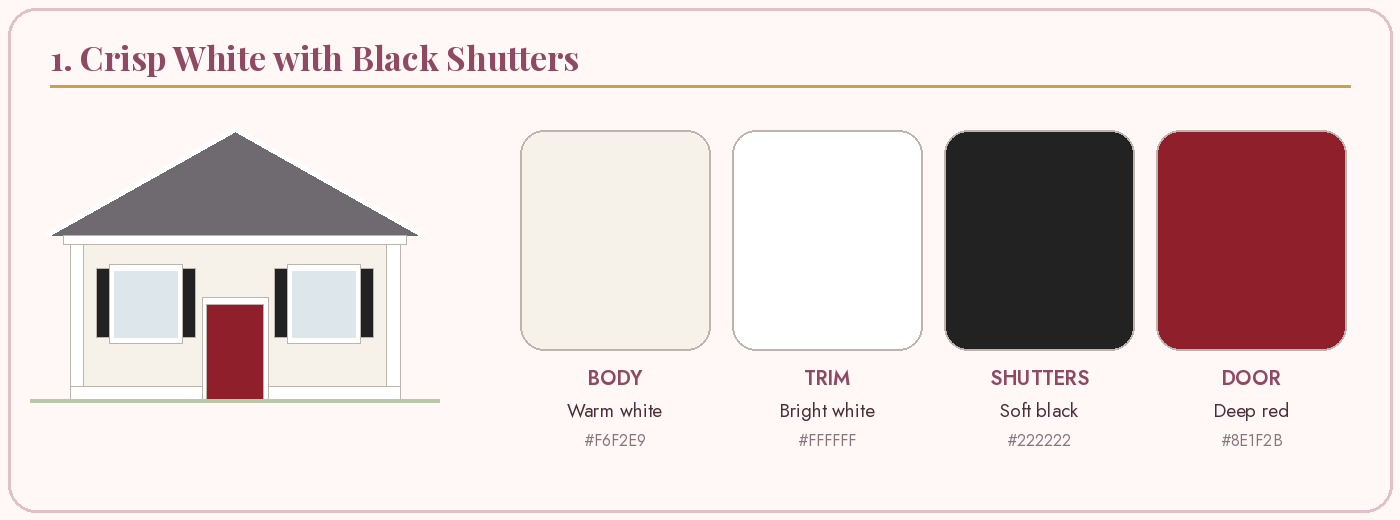
1. Crisp White with Black Shutters
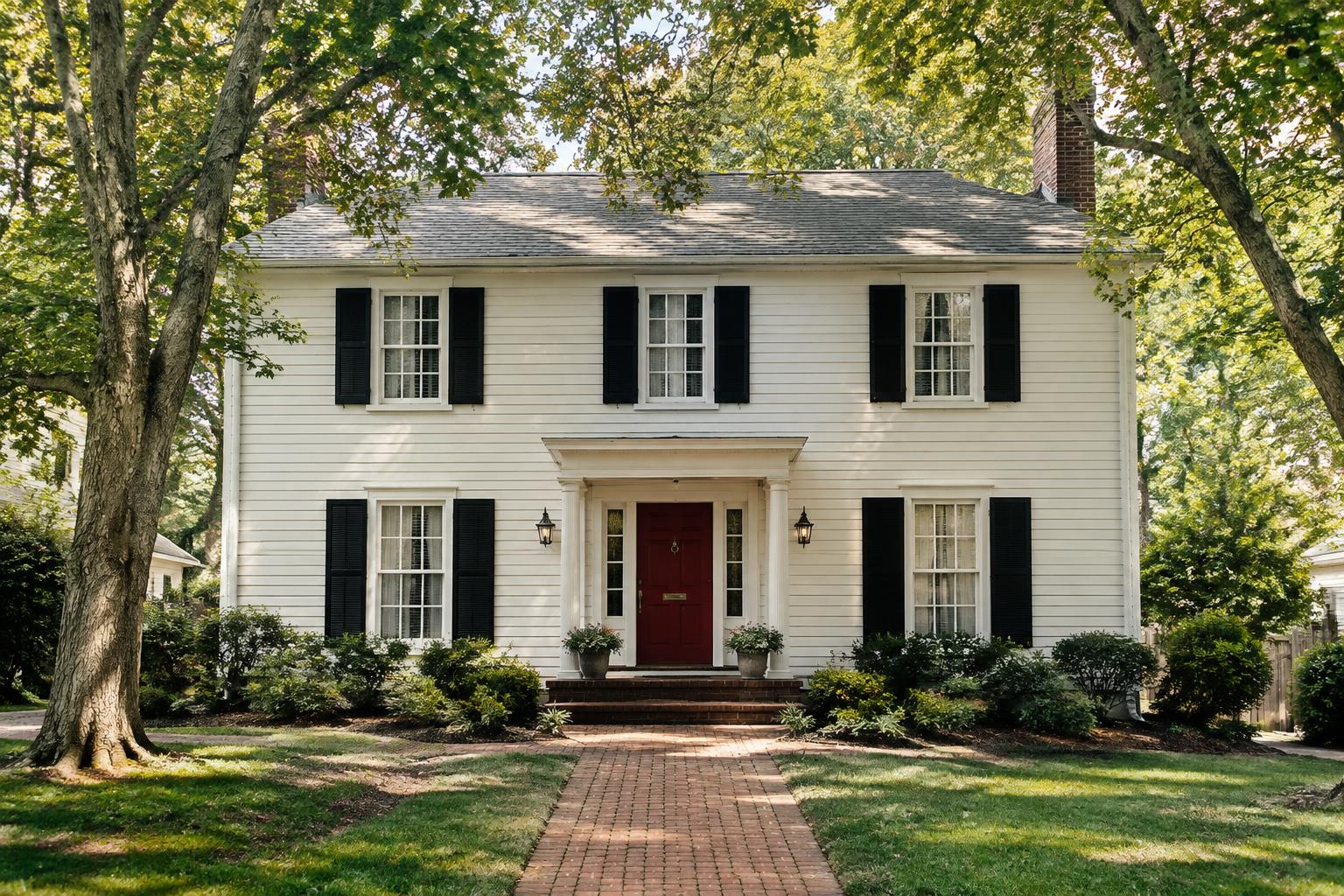
Body: Warm white (#F6F2E9) Trim: Bright white (#FFFFFF) Shutters: Soft black (#222222) Door: Deep red (#8E1F2B) This is the picture most people have in mind when they think of a colonial. White siding feels clean and traditional, black shutters add a graphic outline, and a red door gives the whole home a welcoming focal point. Choose a warm white rather than a stark one so the house looks soft and sunlit instead of cold. Best for: Homes with brick walkways, mature trees and classic landscaping.
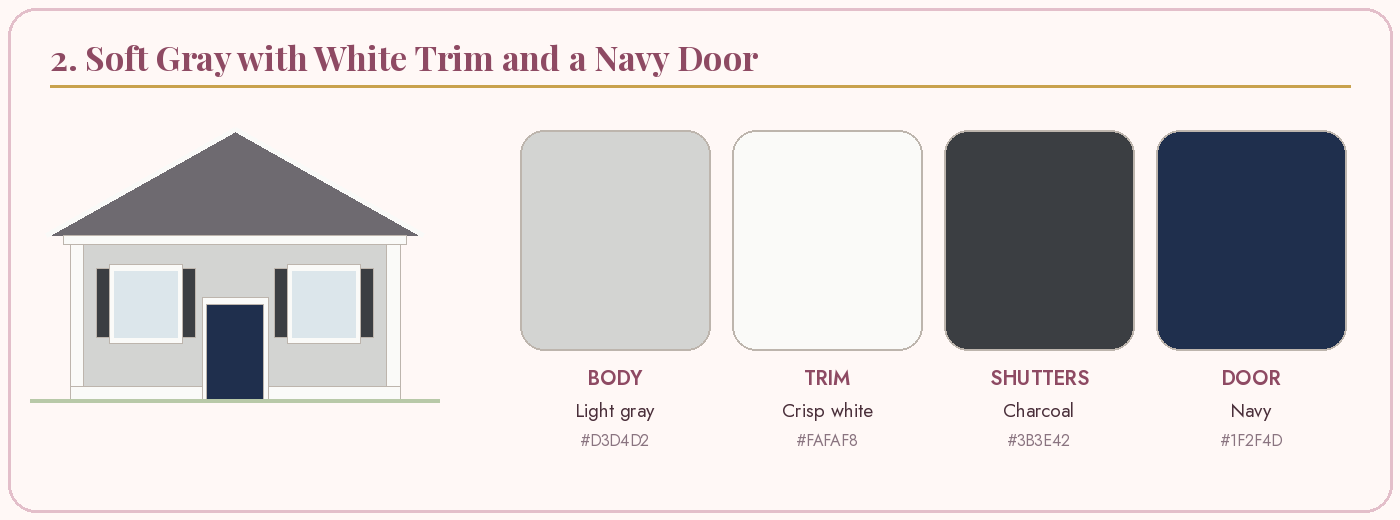
2. Soft Gray with White Trim and a Navy Door
Body: Light gray (#D3D4D2) Trim: Crisp white (#FAFAF8) Shutters: Charcoal (#3B3E42) Door: Navy (#1F2F4D) Gray has become a modern favorite, yet it suits a colonial beautifully. A light, slightly warm gray keeps the look current while the white trim preserves the traditional feel. A navy door adds depth without feeling heavy. Best for: Homeowners who want a fresh look that still feels timeless.
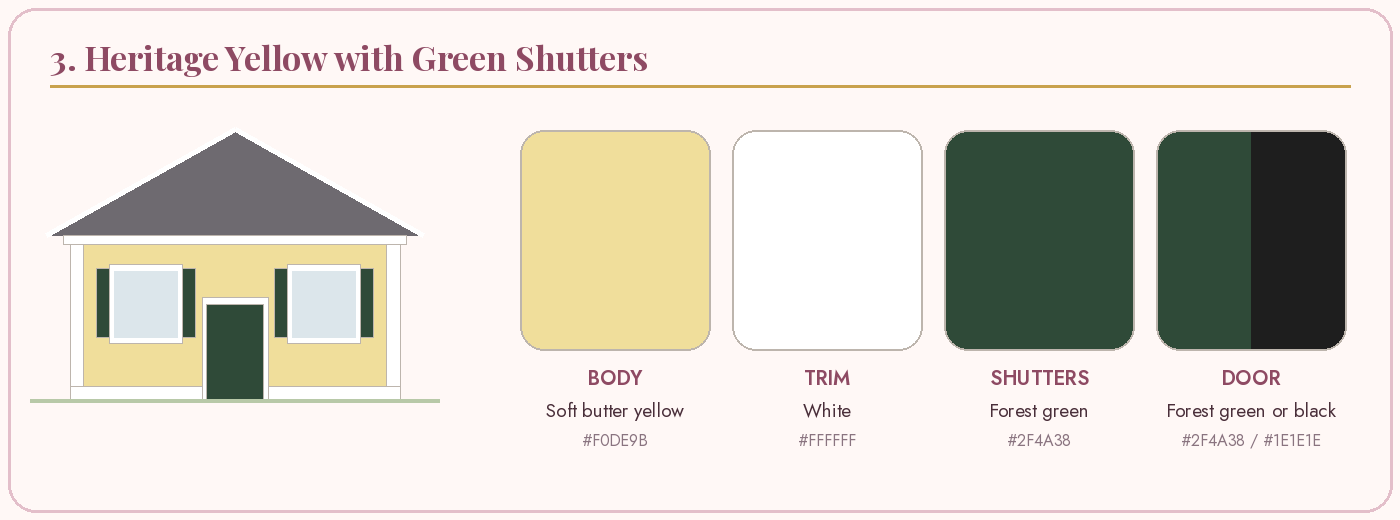
3. Heritage Yellow with White Trim and Green Shutters
Body: Soft butter yellow (#F0DE9B) Trim: White (#FFFFFF) Shutters: Forest green (#2F4A38) Door: Forest green or black (#2F4A38 / #1E1E1E) Yellow colonials have a long history, especially in New England. A muted, buttery shade glows in the morning light and looks cheerful on gray days. Forest green shutters ground the brightness and make the yellow feel sophisticated. Best for: Sunny lots and gardens full of flowers.
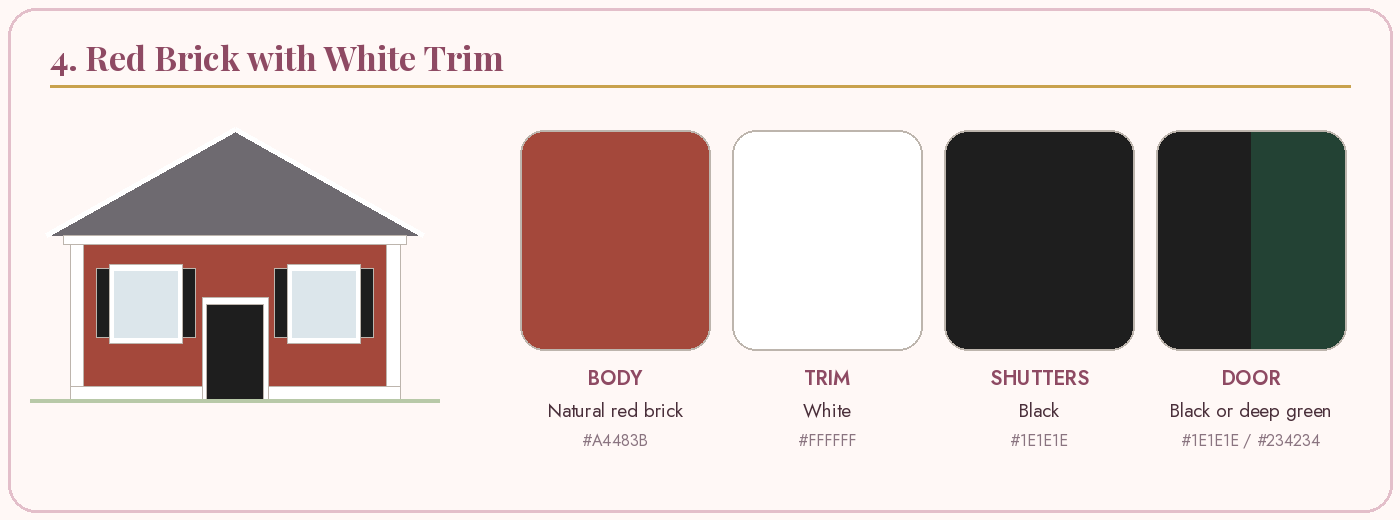
4. Red Brick with White Trim and Black Accents
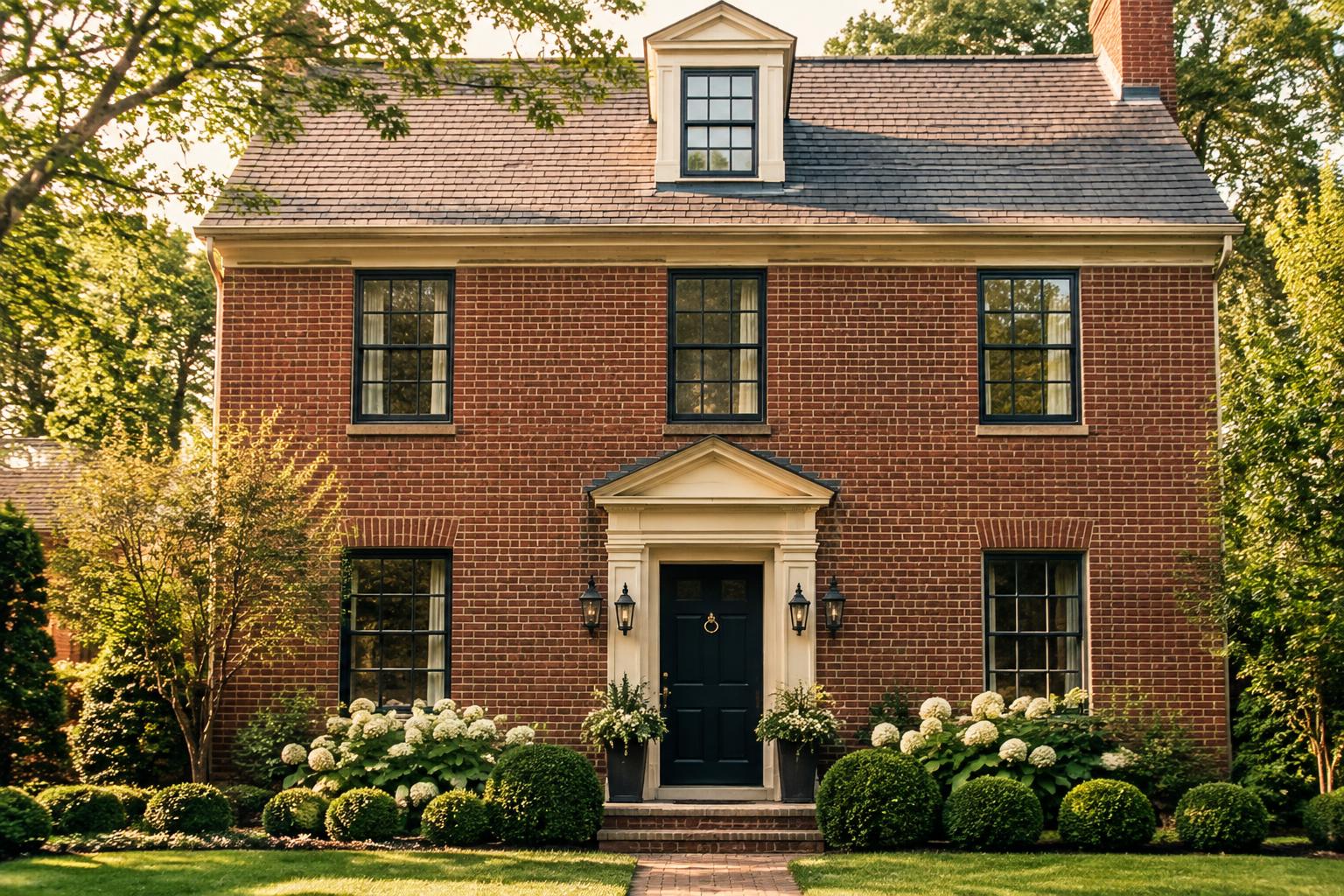
Body: Natural red brick (#A4483B) Trim: White (#FFFFFF) Shutters: Black (#1E1E1E) Door: Black or deep green (#1E1E1E / #234234) If your colonial is made of brick, let it shine. Red brick paired with crisp white trim is one of the most enduring combinations in American architecture. Black shutters sharpen the lines, and a glossy black door looks polished and strong. Best for: Traditional neighborhoods and homes with slate or dark gray roofs.
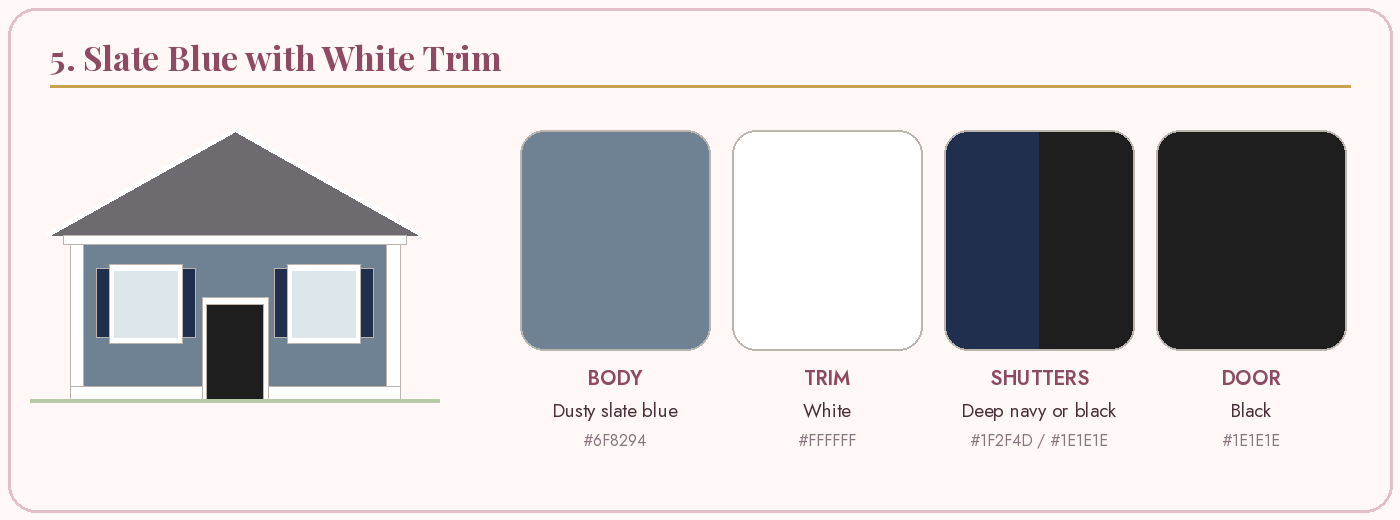
5. Slate Blue with White Trim and a Black Door
Body: Dusty slate blue (#6F8294) Trim: White (#FFFFFF) Shutters: Deep navy or black (#1F2F4D / #1E1E1E) Door: Black (#1E1E1E) Blue-gray siding brings a quiet, coastal calm to a colonial. It changes with the weather, looking soft on cloudy days and a little richer in full sun. White trim keeps it crisp, and darker shutters give it structure. Best for: Homes near water, or anyone who loves a calm, airy mood.
6. Sage Green with Cream Trim
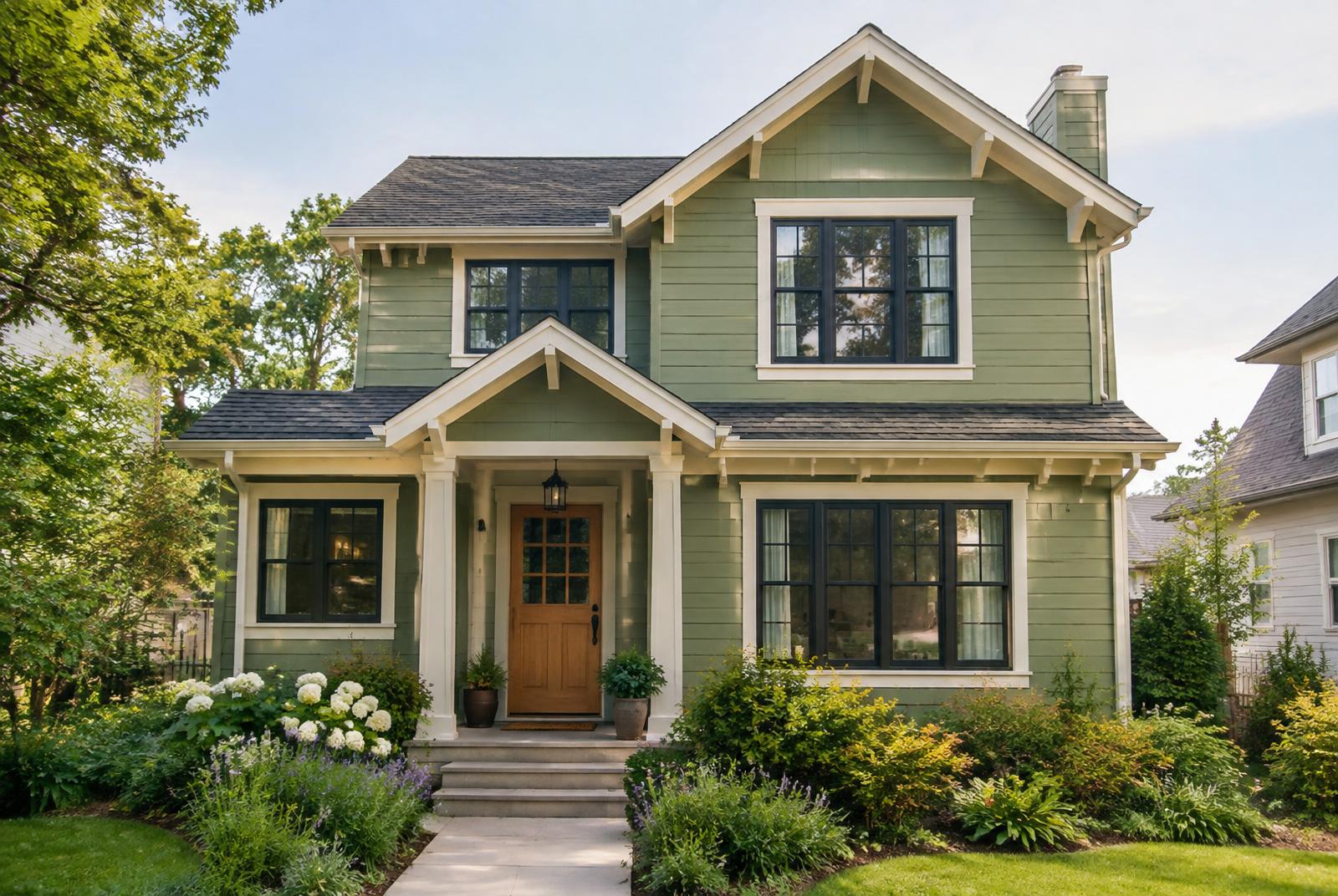
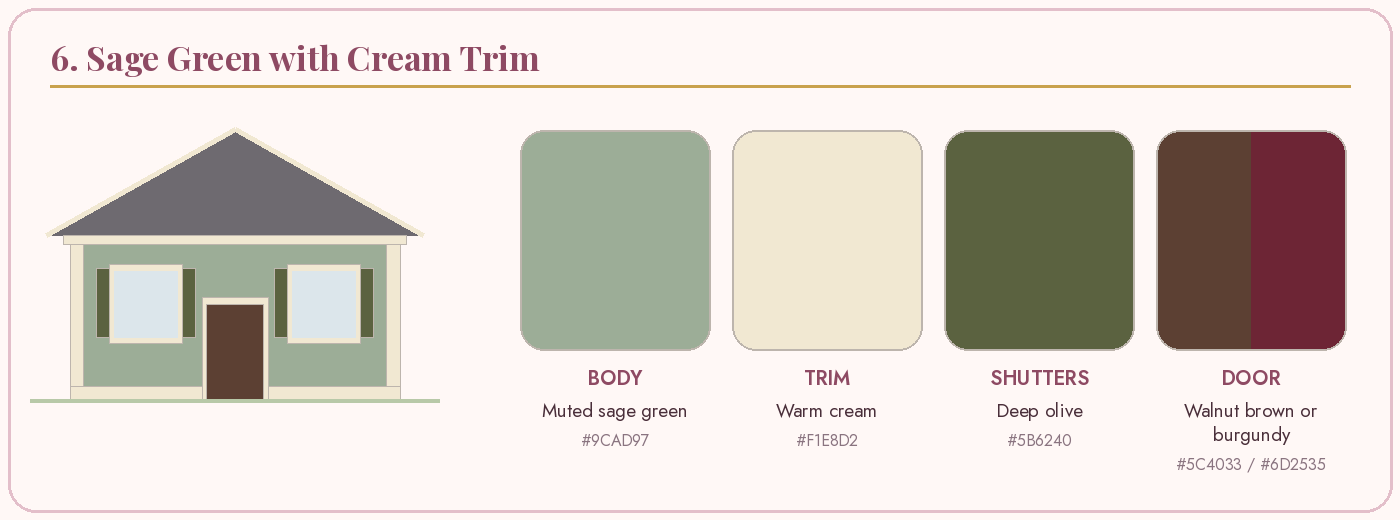
Body: Muted sage green (#9CAD97) Trim: Warm cream (#F1E8D2) Shutters: Deep olive (#5B6240) Door: Walnut brown or burgundy (#5C4033 / #6D2535) Green sits comfortably with nature, which is why sage looks so at home on a colonial surrounded by trees. Cream trim feels gentler than pure white, and a rich wood-toned door adds warmth. Best for: Wooded lots and cottage-style gardens.
7. Greige with Bright White Trim and Charcoal Shutters
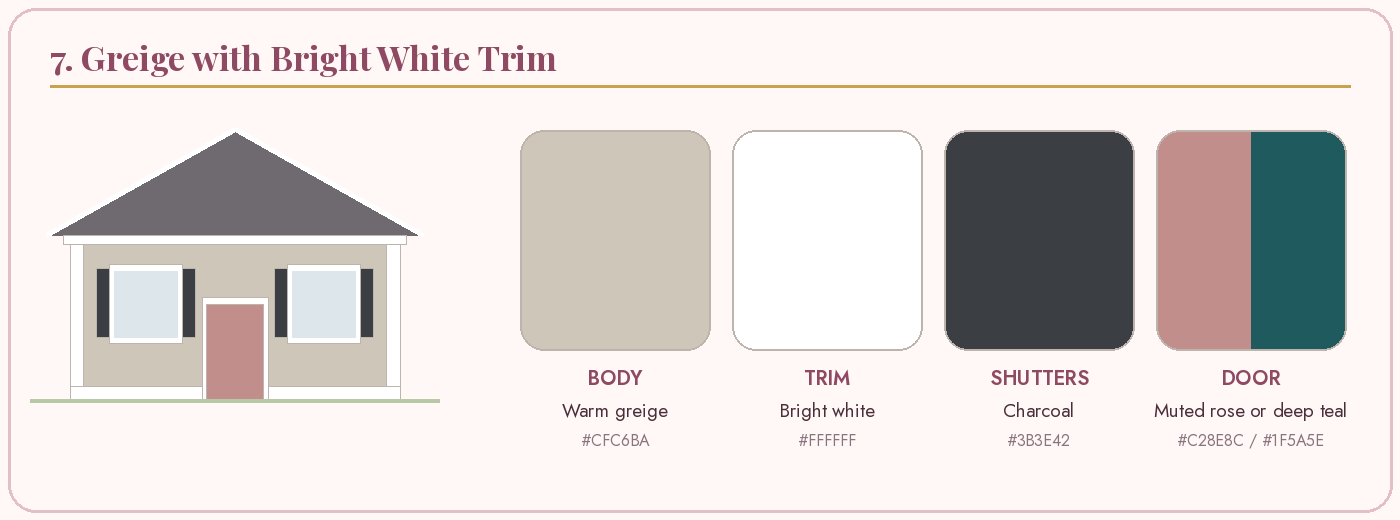
Body: Warm greige (#CFC6BA) Trim: Bright white (#FFFFFF) Shutters: Charcoal (#3B3E42) Door: Muted rose or deep teal (#C28E8C / #1F5A5E) Greige, the mix of gray and beige, is the neutral that goes with everything. It gives you a soft backdrop that suits stone, brick and wood details. A door in a subtle rose or teal adds personality without taking over. Best for: Homes with stone accents or a mix of materials.
8. Deep Salem Red with Cream Trim
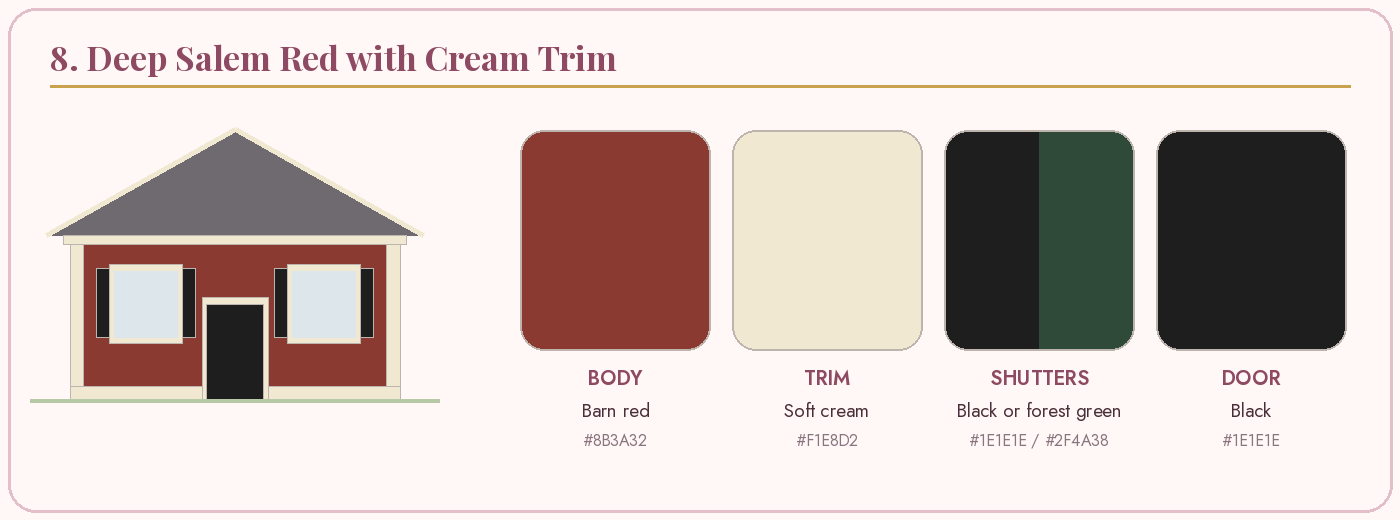
Body: Barn red (#8B3A32) Trim: Soft cream (#F1E8D2) Shutters: Black or forest green (#1E1E1E / #2F4A38) Door: Black (#1E1E1E) The deep red colonials of old New England were practical and beautiful, and they still look striking today. Choose a muted, earthy red rather than a bright one, and pair it with cream trim for an authentic, heritage feel. Best for: Rural settings, saltbox shapes and homes with a historic spirit.
9. Creamy Ivory with Hunter Green Shutters
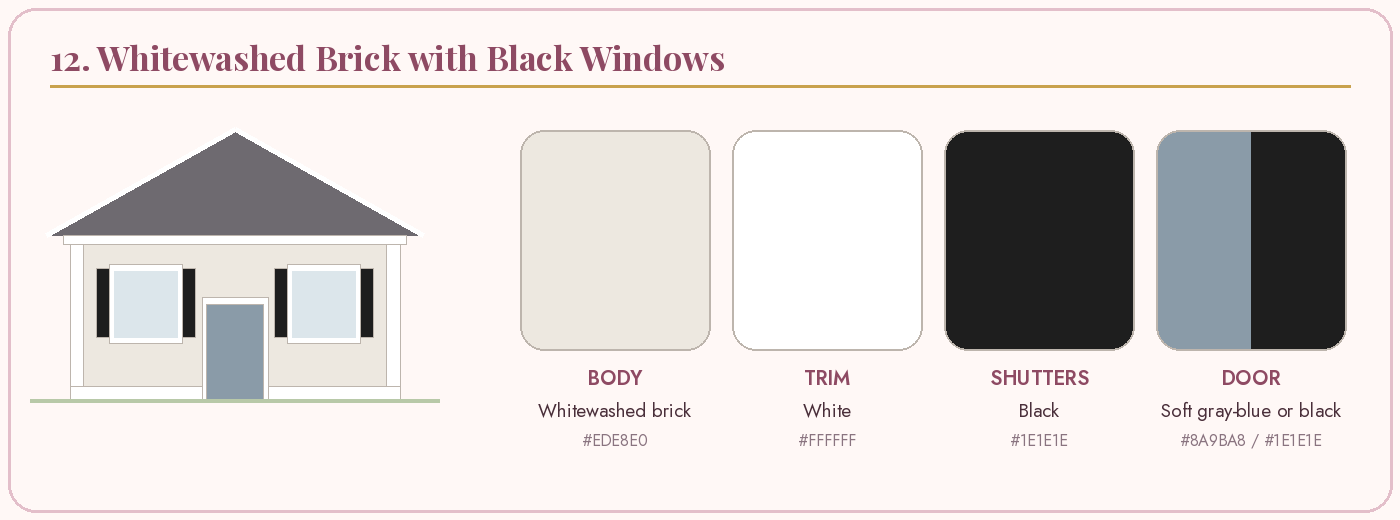
Body: Creamy ivory (#F3EBD6) Trim: White (#FFFFFF) Shutters: Hunter green (#2C4A32) Door: Hunter green or classic red (#2C4A32 / #A32A2E) Ivory feels warmer and more welcoming than white, and it looks lovely beside green shutters. This scheme has a storybook quality, especially when the front garden is in bloom. Best for: Homeowners who want a traditional home that feels warm and inviting.
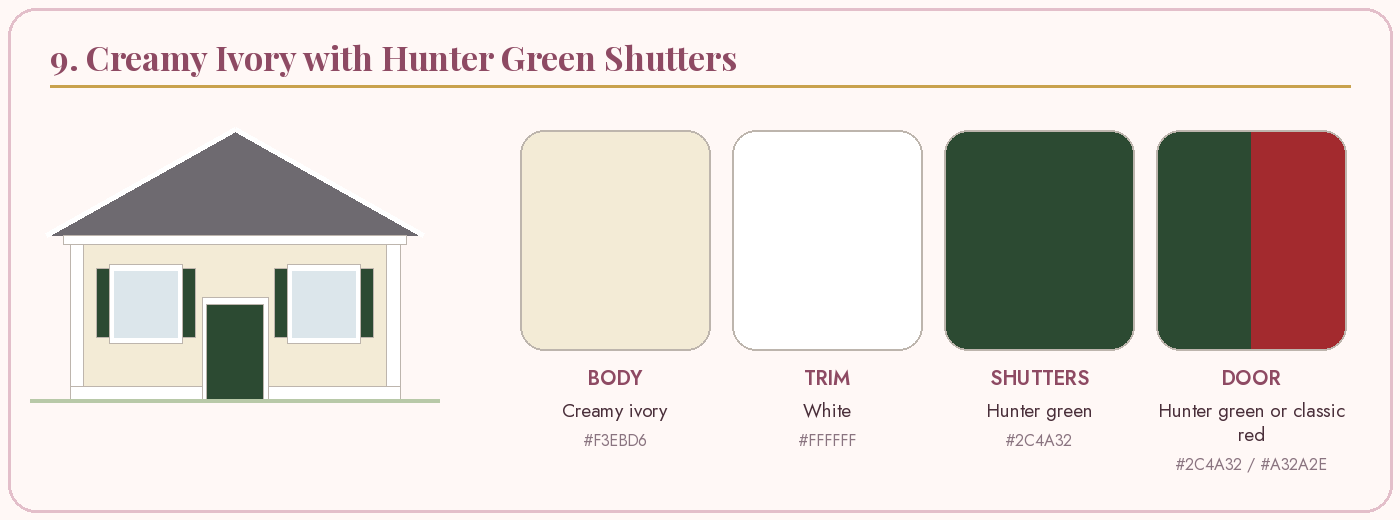
10. Charcoal with White Trim and a Natural Wood Door
Body: Dark charcoal (#3A3D40) Trim: Crisp white (#FAFAF8) Shutters: Black (#1E1E1E) Door: Natural stained wood (#9A6B43) For a modern take on the colonial, go dark. Charcoal siding with bright trim looks dramatic and sleek, and a wood door adds a touch of warmth that keeps the look from feeling severe. Best for: Updated colonials and homes with plenty of natural light.
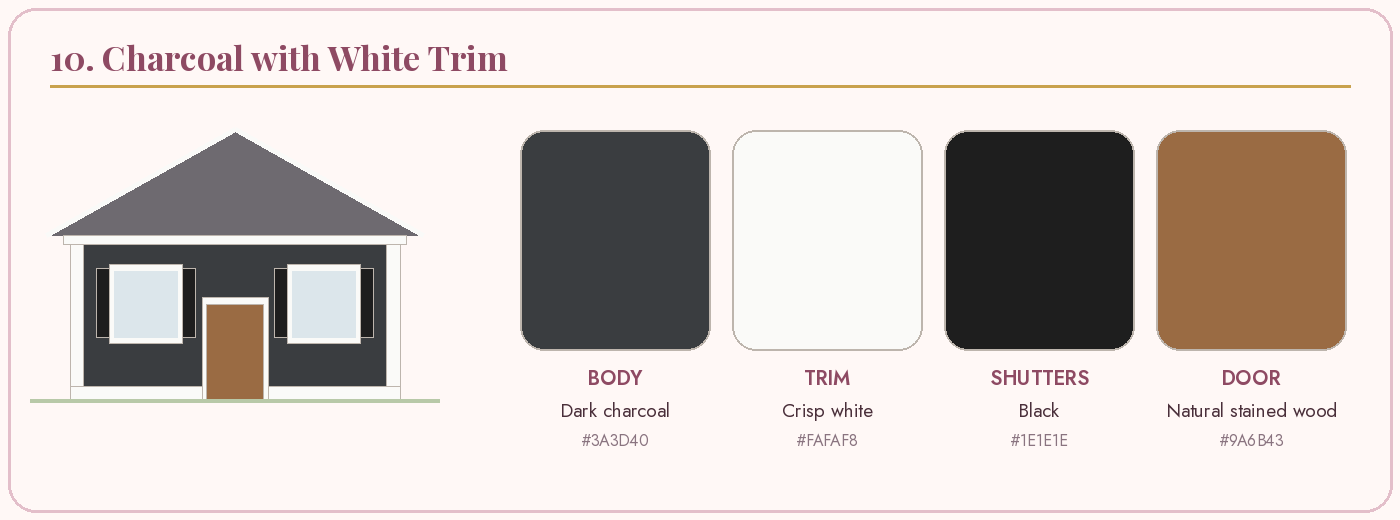
11. Warm Taupe with Ivory Trim and a Burgundy Door
Body: Warm taupe (#B7A898) Trim: Ivory (#F5EFE0) Shutters: Dark brown (#4A3A30) Door: Burgundy (#6D2535) Taupe is understated and elegant. Paired with soft ivory trim, it gives the house a refined, cozy glow. A burgundy door brings in a hint of richness that feels classic and a little romantic. Best for: Homes with earthy landscaping and warm-toned roofs.
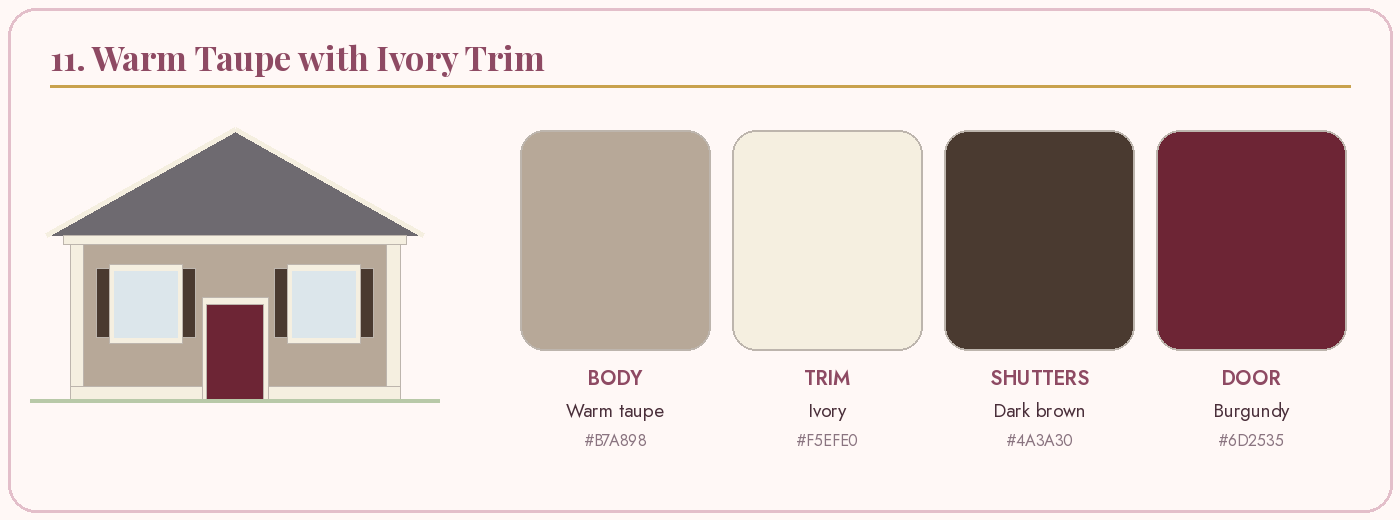
12. Whitewashed Brick with Black Windows
Body: Whitewashed brick (#EDE8E0) Trim: White (#FFFFFF) Shutters: Black (#1E1E1E) Door: Soft gray-blue or black (#8A9BA8 / #1E1E1E) Whitewashing lets the texture of brick show through while brightening the whole house. Black window frames and shutters add contrast, and a gray-blue door adds a gentle surprise. Best for: Brick colonials that feel a bit dark or dated and need a refresh.
How to Choose Your Colonial Color Scheme
A few simple habits make the decision much easier. Start with what cannot change. Your roof, brick, stone and driveway have their own undertones. Make sure your new colors flatter them rather than fight them. Limit your palette. Three or four colors, such as body, trim, shutters and door, is usually plenty. Colonials look best when the design stays simple. Keep the door special. The front door is the easiest place to have fun. A single bold color can change the whole personality of the house. Test before you buy. Paint large samples on several sides of the house and look at them in morning light, midday sun, shade and evening. A color can look completely different at each time of day. Check your neighborhood rules. If you have an HOA or live in a historic district, confirm which colors are allowed before you order paint. Choose the right finish. Flat or low-sheen paint usually suits siding, while satin or semi-gloss is a good choice for trim, shutters and doors because it wipes clean and holds up well outdoors.
Final Thoughts
The best colonial color scheme is the one that feels like home. Whether you love the crisp drama of white and black, the softness of sage and cream or the richness of a deep heritage red, the colors above have proven they can last for generations. Take your time, test your samples, and trust your eye. A well-chosen palette will make your colonial look beautiful today and just as lovely years from now.
The cover image is AI-generated design inspiration. House color examples are from the original guide; hex codes are approximate, so test real paint samples on your house.